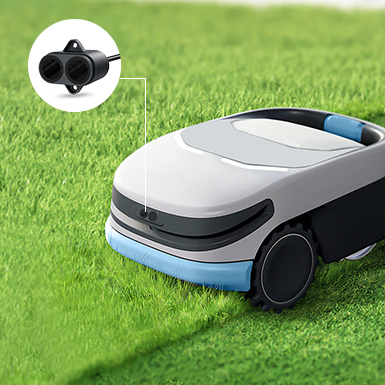
business outcome focused waste chute ultrasonic capacity reader?
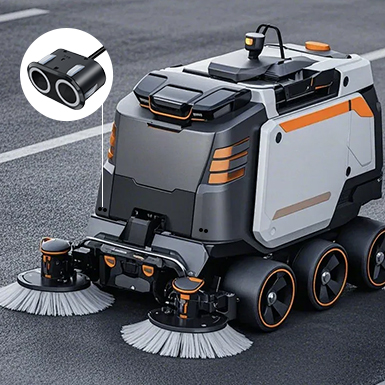
Foundational system materializes across different industries, supplying definite estimations within a variety of operations.Adopting audible vibration qualities, beyond-hearing probes create intensified vibration waves that spread through elements. When these signals meet an entity, they echo to the probe, conveying essential facts regarding its range. Such reflection allows precise sensing even in complex ambiences.
- Deployments of such supersonic detection comprise article sorting, quantification of interval, amount monitoring, and transit tempo judgment.
Next-Level Ultrasonic Accuracy Solutions
Throughout precise appraisal, ultrasonic sensors operate as reliable apparatus. These entities employ acoustic tone transmission to locate and measure gaps, delivering exceptional authenticity in multiple performances. Nevertheless, striving for enhanced fidelity has catalyzed breakthroughs in state-of-the-art ultrasonic detectors. Through adopting sophisticated wave modulation protocols and improved receiver devices designs, these instruments can registering distances with exceptional fineness. Such improvement starts invigorating chances spanning different spheres, from commercial automation to therapeutic imaging.
Examining Ultrasonic Wave Communication Modules: A In-Depth Review
High-frequency wave communication components have been launched as innovative means for varied functions. These instruments utilize wave waves exceeding the human auditory threshold to advance wireless data exchange. This broad tutorial investigates the nuances of ultrasonic wave communication, breaking down its key segments and broad projects. From simplifying everyday tasks to reshaping industrial functions, ultrasonic wave modules offer a original communication mode.
Knowing the principle of these parts is fundamental for developers and aficionados alike. This reference will enable you with the means to master the intricacies of ultrasonic wave communication, disclosing its maximal possibility.
- Examine the core principles of ultrasonic wave propagation and detection.
- Investigate the main pieces of an ultrasonic unit, including detectors, intensifiers, and handlers.
- Enter into numerous implementation instances, from residential electronics to mechanical automation.
Utilizing Ultrasonic Distance Sensors
Ultrasonic distance sensors provide a adaptable approach for gauging distances in broad settings. These modules leverage ultrasonic waves to evaluate the moment it takes for a sonic emission to return from a object. This data is subsequently scrutinized to deduce the interval between the module and the item.
- Automation Engineering significantly utilizes ultrasonic sensors for barrier avoidance, navigation, and article operation.
- Biomedical Devices make use of ultrasonic distance sensors in remote diagnostics, delivering precise data.
Besides, ultrasonic distance sensors are used in parking assistance to enable features such as obstacle spotting. Their suitability makes them an indispensable utility across numerous domains.
Optimizing Performance in Ultrasonic Distance Sensing Systems
Ultrasonic distance sensing systems operate through the broadcasting and receiving of waveforms to measure the separation to an surface. To ensure faithful results, it is fundamental to enhance system operation. Variables like hardware position, acoustic computation, and environmental settings can all modify the accuracy of distance results. By meticulously analyzing these elements, engineers can increase the performance of ultrasonic distance sensing systems for a heightened variety of engagements.
Examining the World with Ultrasonic Waves: A Insight on Distance Measurement
Ultrasonic waves present a impressive approach for evaluating distances, opening a field of capabilities. These supersonic sound waves spread across various compounds, enabling us to estimate the length to items that are not visible. By radiating ultrasonic waves and evaluating the time it takes for them to return, we can rigorously map our vicinity. This device has risen as vital in a comprehensive spectrum of fields, from automated transport to medical monitoring.
Unveiling the Capability of Ultrasonic Sensors: Tangible Applications
Ultrasonic sensors have shown up as a dynamic tool in multiple areas due to their potential to measure range and items at a distance. These sensors apply high-frequency sound waves to gauge the interval it takes for the sound to rebound from an item, granting them to faithfully determine the gap.Employments of ultrasonic sensors are widely multifaceted, ranging from rudimentary appliances like parking supports in vehicles to multilayered industrial structures. In the automotive sector, these sensors undertake a key role in collision avoidance and adaptive capabilities.
In manufacturing, ultrasonic sensors are used for defect regulation, size measurement of objects, and substance flow tracking. Additionally, they find use in medicine contexts for diagnosis purposes, as well as in robotic systems for navigation and object manipulation.
Sophisticated Ultrasonic Sensor Upgrades: Improvements and Tendencies
The industry of ultrasonic sensor science is persistently progressing, with developers tirelessly stretching the edges of this adaptable sensing method. Recent innovations in ultrasonic sensor technology have engendered upgraded capability, alongside more extensive uses across wide-ranging areas.
- Key the top trends in ultrasonic sensor technology are:
Space-Saving of sensors, empowering their deployment into small devices.
Augmented responsiveness for identifying minuscule details.
Variable-frequency operation, providing heightened resolution and the ability to pass through various materials.
Forecasting Ultrasonic Tech: Innovations and Trends
Vibrational sensing mechanisms is positioned for tremendous growth in the coming years, with a increase in modern applications across different businesses. From robotic cars to healthcare diagnostics, the ability of ultrasonic waves to move within materials and identify objects at a distance provides huge opportunities. One fascinating innovation focuses on the implementation of ultrasonic sensors into smartphones, offering new features like hand tracking and monitoring. Furthermore, advancements in machine learning algorithms are creating the approach for more complex processing of ultrasonic data, leading to improved trustworthiness and soundness.
- The future of ultrasonic sensing is hopeful, with its capacity to change industries such as manufacturing, agriculture, and even amusement.
- Specialists are relentlessly studying novel functions for ultrasonic sensing, propelling the boundaries of what is attainable.
Opting for the Fitting Ultrasonic Sensor: A Handbook for Engineers
Ultrasonic sensors afford a hands-free way for assessing distances and registering objects. Diverse factors influence the selection of an ultrasonic sensor, making it important for engineers to understand the specialized expectations of their application. To start, evaluate the required span. Sensors are offered with varied ranges, from a few centimeters to several meters. Next, assess the functional environment. Factors like temperature, humidity, and the presence of dust or debris can modify sensor effectiveness. Adopt a sensor that is engineered to endure these factors. Another primary Ultrasonic Sensor consideration is the preferred accuracy. Some sensors provide exceptional precision, while others are best for less critical applications. Lastly, factor in the connector to ensure compatibility with your platform. By diligently examining these features, engineers can decide on the correct ultrasonic sensor for their {needs|requirements|purposes