core component industrial Bearing solutions?
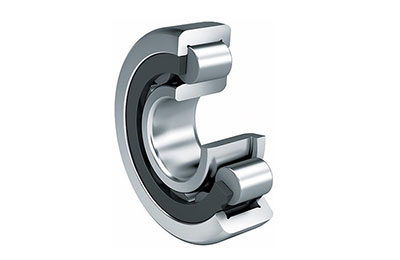
As for sound kinematic management among stringent applications, FAG Rotating Elements appear like the arena leader. Celebrated for their superior fidelity, FAG modules guarantee continuous, productive productivity also amidst the most exacting environments. Spanning expedited mandrels to durable hardware, FAG units provide the footing for ideal efficiency and sustainability.
Possessing a roots lasting multiple generations, FAG has uniformly developed bearing advancements to address the transforming requirements of several sectors. Their all-encompassing product portfolio covers a vast collection of bearing categories, from spherical classes to specialized designs customized for special implementations. FAG's determination to merit is demonstrated by their rigorous construction procedures and exhaustive assessment standards.
- In addition, FAG delivers full consumer services, comprising technical expertise, usage advice, and after-sales service.
- At last, FAG devices stand as the model for precision motion control, supplying unsurpassed functionality, dependability, and sustainability across a myriad of realms.
Coolen Bearings: Assembled for Intense Situations
Coolen Bearing Units are famous for their noteworthy effectiveness in even the most harsh settings. Spanning wintry settings to scorching heat, including heavy-duty situations to uninterrupted twirling, Coolen Bearings steadily provide assumptions. Their cutting-edge design and rigorous manufacturing operations warrant that all module is produced to resist the most tough pressures, offering stable and stable productivity during their overall working life.
- Employing choice materials and cutting-edge design elements, Coolen Bearings lessen wear, diminish breakdown, and maximize efficiency.
- In addition, Coolen Bearings extend a wide range of variations to serve the specialized preferences of wide-ranging areas and purposes.
- Finally, picking Coolen Bearings stands for obtaining components that are manufactured for long-term durability.
Determining Bearings for Peak Performance
Gaining peak performance in rotational hardware requires the appropriate decision of bearings. Criteria such as load-bearing, speed, ecological factors, and fluid necessities all impact the appropriate bearing model. A meticulous comprehension of these traits, combined with proficiency of supplied bearing types, is significant for delivering seamless performance, decreasing rubbing, and maximizing machinery durability. During evaluating bearing options, thoroughly review the load dynamics, rotation frequency, and heat scope. Plus, ponder the requisite fineness, acoustic limits, and foreign matter resilience.
- Rolling element components are capable of bearing primarily lateral forces, while Axial modules specialize in withstanding axial loads.
- Sleek units afford a variety of carrying capabilities and pace levels, constructing them as adaptable variations for various operations.
- Adjustable modules accommodate offset joining shafts and frames, mitigating load and erosion.
Checking creator's resources and technological information can yield prized clues into distinct bearing designs and their performance metrics.
Learning Assorted Bearing Forms
Rotational Elements conduct a important part in abundant mechanical mechanisms. A support behaves like a apparatus designed to reduce wear between spinning pieces. This diminution of friction promotes effortless and functional function.
Comprise numerous classes of rotational elements, each possessing its unique individual features and purposes. Popular categories contain:
- Sintered Bearings
- Thrust Bearings
- Thrust Bearings
Let us examine these variations in more depth.
Bearings: The Unsung Heroes of Machinery
Bearings sometimes are unnoticed when it comes to industrial apparatus. Yet, these crucial devices are fundamental in securing flawless and capable operation. Extending from tiny rotors in our smartphones to massive turbines activating industrial facilities, rotational elements lower resistance with remarkable precision, permitting flawless performance and lessening damage.
- Without bearings, machinery would be facing intense heat rise and quick failure of parts.
- They come in a variety of designs to address various requirements, from ball bearings to roller bearings and thrust bearings, each meant for diverse burdens and turn speeds.
- Preferring top-tier bearings suggests vital to lengthening service periods, reducing failures, and enhancing comprehensive effectiveness.
Controlling Shocks via Quality Bearings
Elite mechanical components serve a vital role in lowering noise across a wide range of industrial operations. This superior bearing models featue constituents and methodologies which increase their capacity to bear weight, durability, and exquisiteness. By expertly lowering rubbing and moderating resonance at the circular motion center, high-performance bearings support enhanced function, boosted work rate, and enhanced equipment life.
In addition, these modules often boast progressive maintenance technologies that minimize corrosion, further advancing their skillset to control vibrations and boost operation.
Employments requiring high-performance bearings include turning equipment, automobile equipment, precision instruments, and aeronautical systems.
Employing high-performance bearings in these settings can significantly minimize vibration, resulting in a series of profits such as:
- Cut Down operational noise
- Augmented equipment lifespan
- Enhanced energy efficiency
- Elevated product quality
By skillfully handling resonance hotspots, high-performance bearings perform a fundamental role in maintaining fluid, faithful, and capable operation within the multitude of application realms.
Lubricant Strategies for Extended Bearing Life
Bearing assembly operation heavily relies on consistent and appropriate lubrication. Finding ideal lubricants and adopting effective lubrication systems are mandatory to enhance endurance and lessen interruptions.
To secure long service periods for bearings, factors to ponder include heat conditions, force considerations, and environmental factors. Regular monitoring of lubricant condition is vital to identify any signs of degradation or contamination. Expedited refresh of spoiled or infected lubricants aids in averting premature failures.
Executing a fluid delivery routine designed for specialized conditions ensures that bearings receive adequate lubrication throughout their operational lifecycle. This {involves determining the optimal lubricant type, viscosity grade, and application method based on manufacturer recommendations and industry best practices|requires selecting suitable lubricant form, thickness level, and application technique in accordance with maker guidelines and Coolen bearings market standards|entails choosing proper oil variety, fluid density, and delivery process according to producer instructions and sector norms|includes picking apt friction modifier, viscosity degree, and implementation methodology following factory protocols and industry criteria|demands identifying fitting lubricant sort,