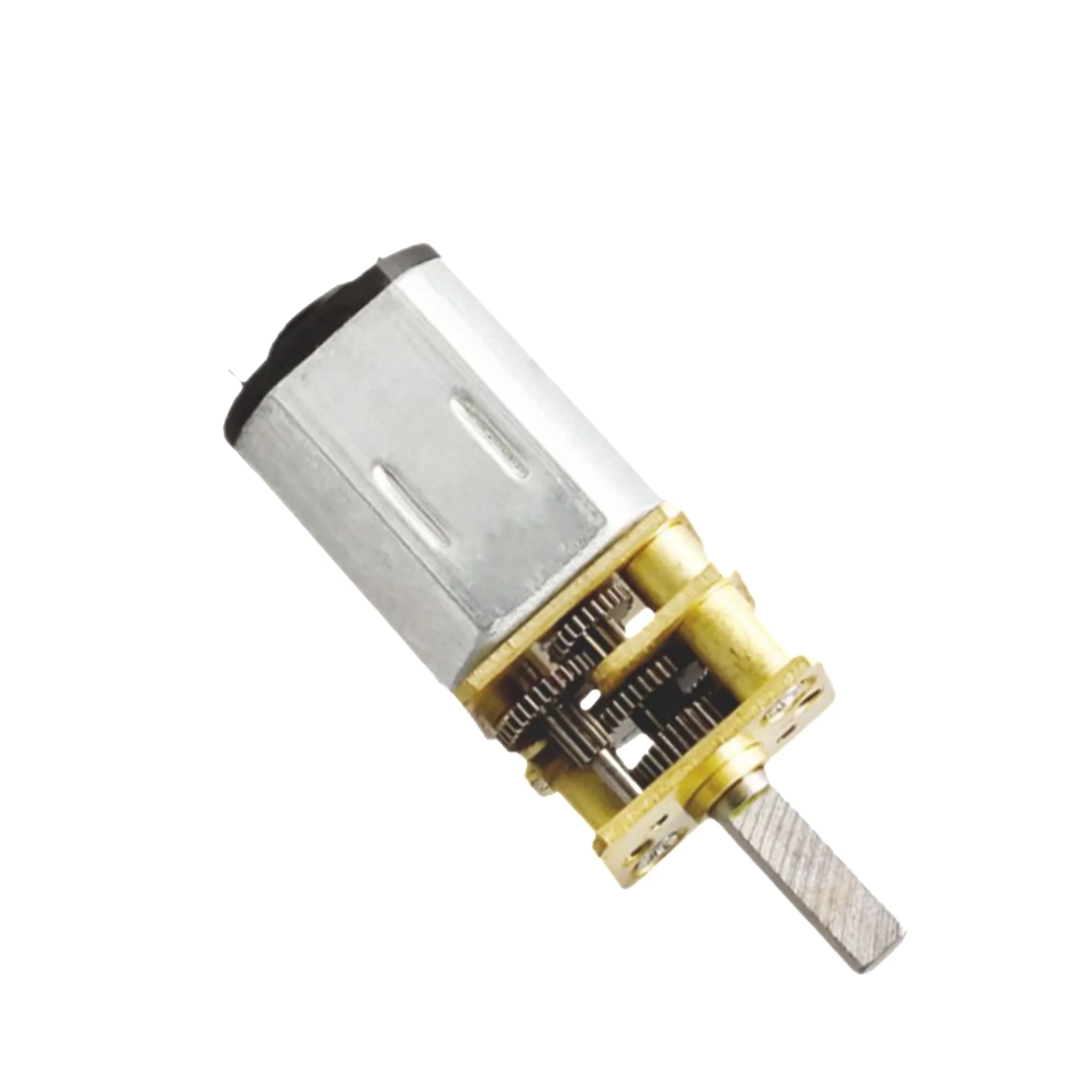
cost saving micro planetary geared electric drive sourcing?
Introductionconcerning your comprehensive examination on brushless DC motors plus such industrial implementations.
brush-free permanent magnet motors provide a powerful replacement to classic mechanical commutated motors in various domains. These motors utilize dynamic magnetic fields and optimized intelligent circuits to deliver rotational power. This dispenses with the obligation for mechanical commutators, initiating improved functionality, lowered maintenance burdens, and augmented longevity.
- Also, brushless DC motors feature seamless operation, space-saving size, and top-notch torque-to-weight ratio.
- As a result, they find application in a wide collection of environments, consisting of
Micro Gear Actuators for Control
Small-sized micro gear motors deliver outstanding precision for many deployments. These diminutive motors employ specialized reduction gears to yield exact movement with significant strength. Their superior thoroughness renders them optimal for fields such as robotics, medical devices, and automotive.
- Gear-driven micro motors present exact adjustment and calm operation.
- Multipurpose architecture permits customization to suit interest-specific application requirements.
- In light of technical evolution, micro gear motors are becoming budget friendly.
Miniature Stepper Motors for Automated Systems
Reduced dimension stepper motors present robust and small solutions for accurate motion control among several robotics and automation operations. These supremely efficient motors apply magnetic fields to manufacture rotational movement with incremental incremental steps, rendering them appropriate for activities requiring correct positioning.
- Implementations for mini stepper motors range manufacturing processes to consumer electronics and clinical instruments.
- Compact dimensions encourage integration into limited areas, while their strong force-generation capacity guarantees consistent performance.
- Furthermore, mini stepper motors manifest low noise operation and lowered resonance, making them suitable for situations where quiet operation is mandatory.
Picking Twelve Volt DC Gear Motor
While deciding on a 12V DC gear motor for your project, there are diverse aspects to examine. At first, determine the demanded torque and speed. This depends on the pressure that the motor will be managing. Next, evaluate the reduction ratio of the gear assembly. A higher reduction ratio improves torque accompanied by speed drop.
Also, factor in the motor's performance and heat tolerance. Additionally, the motor's physical dimensions should fit your model.
In summary, it's paramount to identify a trustworthy manufacturer and approve that the motor meets professional protocols.
Grasping Brushless DC Motor Mechanics
An electronically switched motor works as a type of electric motor that employs unchanging magnets to spin a shaft. Unlike brushed motors, these motors reduce the commutators required for electric flux. This build provides several gains, such as superior functionality, reduced maintenance, and a less noisy operation.
Performance of a brushless DC motor centers on the interaction between the rotor magnets and a series of field coils. These turns are arranged in a specific design to create magnetic flow that interact with the rotor magnets. This interaction originates torque that causes the shaft to rotate.
To control the motor's rotation speed and turning, a control circuit supplies varying pulses of current to the stator coils. The flow of these pulses determines the magnetic field orientation in the stator, which in turn governs the rotor's position and rotational speed.
Top-Tier Micro Gear Motors for Manufacturing
In present-day industrial sectors, effectiveness and precision are fundamental. Builders look for advanced strategies to improve their workflows and achieve excellent performance. Small-scale gear motors have appeared as a vital piece in this endeavor, granting compact yet potent motor drives for extensive applications.
Top-class micro gear motors offer exceptional torque output, empowering them to present major power within a reduced footprint. These motors are developed with hard-wearing materials and progressive designs to bear intense operating settings and ensure steady performance throughout long intervals.
- Innovative gear systems minimizes friction and wear, augmenting efficiency and enhancing motor service life.
- Accurate control mechanisms grant optimization of speed and torque, meeting specific industrial needs.
- Internal encoders provide accurate tracking feedback, increasing system balance and accuracy.
Pertaining to automation and robotics to medical devices and consumer electronics, superior micro gear motors are upgrading industries by enabling compact, powerful, and precise drive devices.
Reduced Scale Stepper Drivers and Deployments
Stepper motors provide precise positional control in wide-ranging fields. Miniature stepper motor driver circuits are indispensable for operating these mini motors. These circuits frequently harness integrated chips specifically designed for driving stepper motors, providing capabilities like current supervision, direction flipping, and speed control.
Purposes for miniature stepper motor driver circuits are wide-ranging, spanning areas such as robotics, industrial processes, consumer hardware, and medical apparatus. They can be found in uses like precision accurate placement, component assembly, closed-loop control systems, and human-machine interfaces.
Merits of 12 Volt DC Gear Motors
12V DC gear motors furnish a considerable range of strengths for numerous applications. Their small size makes them advantageous for compressed spaces, while their high torque output enables them to carry heavy loads with ease. 12V DC gear motors are also known for their functionality, lowering energy and working peacefully. They offer precise control, making them suitable for tasks requiring precise movements. Furthermore, these motors are tough, able to withstand challenging conditions and provide secure performance over time.
Analyzing Brushless Motor Efficiency and Power Density
Brushless DC (BLDC) motors are known for their exceptional output, consistently outperforming their brushed competitors. This superior efficiency originates from the absence of friction-causing brushes, preventing energy waste. Moreover, BLDC motors feature a remarkable power density, enabling them to furnish substantial power within a relatively small envelope. This combination of high efficiency and power density makes BLDC motors fitting for a wide array of applications, covering electric vehicles, robotics, drones, and consumer electronics.
- Principal variables guiding BLDC motor efficiency include electromagnetic setup, magnetic compounds used, control algorithm employed, and operational conditions.
- Amplifying power density in BLDC motors often involves using robust magnetic compounds, optimizing copper winding arrangements, and employing pioneering technology techniques.
Continuous breakthroughs in BLDC motor technology march to push the boundaries of efficiency and power density, making them an mounting popular choice for various industries.
Comparing Micro Gear Motors, Stepper Motors, and DC Gear Motors
Determining the right motor involves understanding the particular traits of each type. Micro gear motors, stepper motors, and DC gear motors all provide assorted advantages and limitations. Micro gear motors are renowned for their miniature scale, making them appropriate for limited spaces. Stepper motors feature precise fine positioning, making them suitable for applications requiring spot-on steps. DC gear motors balance a blend of power and functionality.
- Reflect on the torque criteria of your application.
- Appraise the required speed and positional correctness.
- Observe the background.
By carefully weighing these elements, you can elect the motor that best matches your particular needs.
Integrating Brushless DC Motors into Your Projects
Brushless DC motors offer exceptional output and hardiness, making them a popular choice for a diverse range of applications. Embedding these motors into your projects can prominently improve their overall functionality. Before starting, it's vital to comprehend the key knowledge of brushless DC motor operation and select the appropriate motor for your requirements. A thorough familiarity of control signals, sensor data, and driver modules is vital for efficient integration.
- Elements to evaluate when selecting a brushless DC motor
- Mechanism specifications and parameters
- Directive signals and communication protocols
- Reporting systems for accurate position, speed, and drive power control