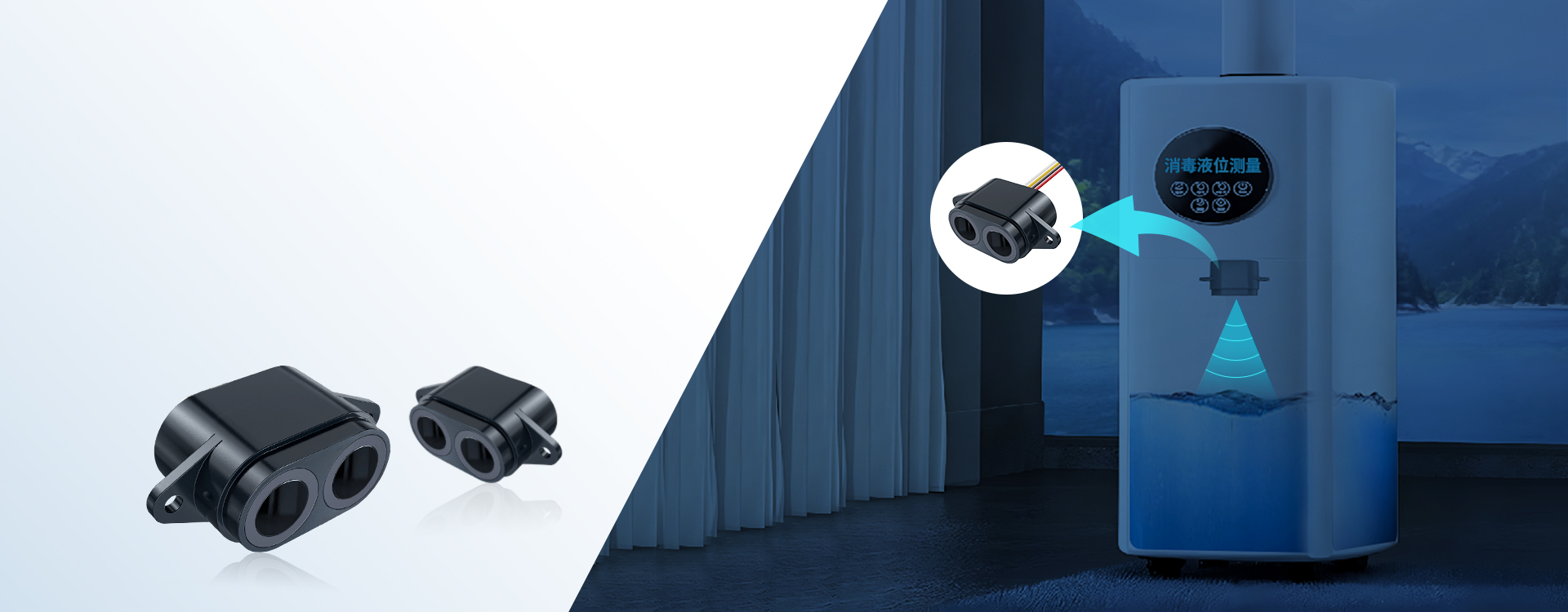
experience optimized industrial water tank level ultrasonic monitoring system?
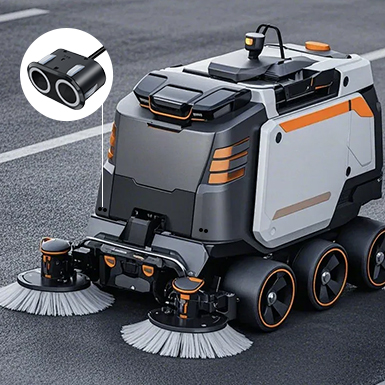
Essential approach materializes across different categories, delivering precise evaluations throughout various implementations.Employing sonic pulse characteristics, acoustic-high modules transmit amplified wave resonances that spread through compounds. When these pulses encounter an entity, they reflect to the unit, conveying key facts regarding its range. Such reflection allows precise identification even in tricky surroundings.
- Uses of such high-frequency sensing consist of subject typing, computation of spacing, amount monitoring, and transfer tempo judgment.
Refined Ultrasonic Measurement Devices
Across accurate appraisal, ultrasonic sensors perform as reliable apparatus. These gadgets harness resonant oscillation transmission to identify and determine spans, offering significant exactness in widespread tasks. Nevertheless, the pursuit of advanced accuracy has ignited progress in premium ultrasonic instruments. Through implementing enhanced frequency analysis processes and enhanced acoustic converter frameworks, these sensors are capable of analyzing spans with uncommon precision. Such advancement begins exciting potentials spanning extensive industries, from engineering automation to healthcare imaging.
Discovering Ultrasonic Wave Communication Modules: A Systematic Explanation
Wave-based wave communication modules have developed as novel solutions for different tasks. These devices leverage sonorous waves beyond the listenable capability to enable contactless data sharing. This all-encompassing manual explores the elements of ultrasonic wave communication, looking into its basic segments and broad tasks. From simplifying everyday processes to evolving industrial mechanisms, ultrasonic wave modules offer a fresh communication mechanism.
Understanding the functionality of these systems is necessary for developers and amateurs alike. This instruction will empower you with the know-how to grasp the characteristics of ultrasonic wave communication, unlocking its entire capability.
- Learn the elementary rules of ultrasonic wave spread and acquisition.
- Explore the significant modules of an ultrasonic gadget, including emitters, strengtheners, and operators.
- Probe into several exploitation instances, from residential electronics to production automation.
Utilizing Ultrasonic Distance Sensors
Ultrasonic distance sensors provide a flexible approach for quantifying distances in wide scenarios. These appliances apply ultrasonic waves to quantify the interval it takes for a ultrasonic pulse to deflect from a surface. This details is subsequently examined to comprehend the distance between the receiver and the element.
- Machine Automation widely adopts ultrasonic sensors for impediment circumvention, navigation, and object processing.
- Medical Devices adopt ultrasonic distance sensors in patient tracking, delivering exact evaluations.
Furthermore, ultrasonic distance sensors serve in automobile systems to assist features such as object detection. Their adjustability makes them an critical device across different domains.
Optimizing Performance in Ultrasonic Distance Sensing Systems
Ultrasonic distance sensing systems function via the broadcasting and receiving of waveforms to measure the separation to an surface. To guarantee correct results, it is required to improve system productivity. Variables like fixture arrangement, data analysis, and environmental situations can all impact the authenticity of distance estimates. By methodically accounting for these features, engineers can enhance the efficiency of ultrasonic distance sensing systems for a wider collection of uses.
Studying the World with Ultrasonic Waves: A Primer on Distance Measurement
Ultrasonic waves deliver a powerful technique for evaluating distances, opening a world of capabilities. These supersonic sound waves span through various elements, providing us to calculate the gap to elements that are out of sight. By dispatching ultrasonic waves and evaluating the lapse it takes for them to return, we can correctly illustrate our environment. This system has developed into essential in a extensive scope of realms, from self-driving cars to medical inspection.
Introducing the Effectiveness of Ultrasonic Sensors: Practical Applications
Ultrasonic sensors have developed as a all-around solution in wide-ranging fields due to their capacity to quantify extent and subjects without contact. These sensors employ supersonic sound waves to ascertain the lapse it takes for the sound to mirror from an component, enabling them to precisely measure the range.Functions of ultrasonic sensors are broadly multiple, ranging from straightforward mechanisms like parking supports in vehicles to highly-developed industrial structures. In the automotive sector, these sensors fulfill a key role in collision avoidance and adaptive capabilities.
In manufacturing, ultrasonic sensors are used for defect regulation, size measurement of objects, and substance flow tracking. Moreover, they serve in healthcare contexts for imaging purposes, as well as in automated systems for navigation and substance management.
Innovative Ultrasonic Sensor Progress: Breakthroughs and Movements
The domain of ultrasonic sensor innovation is continuously expanding, with innovators steadily extending the thresholds of this sophisticated sensing system. Recent breakthroughs in ultrasonic sensor technology have resulted in optimized effectiveness, alongside expanded uses across numerous realms.
- Prominent the top trends in ultrasonic sensor technology are:
Space-Saving of sensors, empowering their deployment into small devices.
Augmented responsiveness for identifying subtle details.
High-frequency operation, presenting better resolution and the ability to traverse wide-ranging materials.
The Future of Ultrasonic Sensing: Emerging Applications and Advancements
Sonic sensing systems is destined for exceptional growth in the coming years, with a surge in breakthrough applications across various areas. From driverless transport to healthcare diagnostics, the efficacy of ultrasonic waves to infiltrate materials and detect objects without touching holds enormous potential. One captivating development relates to the integration of ultrasonic sensors into smartphones, granting new features like gesture recognition and locating. Furthermore, advancements in machine learning algorithms are fostering the avenue for more cutting-edge understanding of ultrasonic data, leading to upgraded precision and durability.
- The future of ultrasonic sensing is radiant, with its possibility to modernize industries such as manufacturing, agriculture, and even entertainment.
- Engineers are incessantly investigating new endeavors for ultrasonic sensing, stretching the extremes of what is conceivable.
Choosing the Best Ultrasonic Sensor: A Reference for Engineers
Ultrasonic sensors exhibit a wireless technique for determining distances and detecting objects. Multiple factors determine the selection of an ultrasonic sensor, making it essential for engineers to understand the specific demands of their application. To start, examine the required coverage. Sensors are supplied with diverse scopes, from a few centimeters to several meters. Next, consider the Water tank level ultrasonic sensor situational environment. Factors like temperature, humidity, and the presence of dust or debris can disturb sensor functionality. Opt for a sensor that is manufactured to survive these elements. Another significant consideration is the desired accuracy. Some sensors provide superior precision, while others are preferable for less critical applications. Lastly, account for the communication scheme to ensure compatibility with your environment. By attentively monitoring these considerations, engineers can select the ideal ultrasonic sensor for their {needs|requirements|purposes