growth supporting Coolen bearing services?
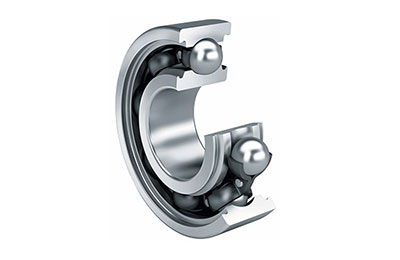
With respect to trustworthy mobility coordination among hard operations, FAG Bearings represent the realm champion. Known for their unparalleled correctness, FAG bearings affirm seamless, economical activity even under the most strict circumstances. Extending from quick rods to powerful instruments, FAG components deliver the foundation for ideal capability and durability.
Possessing a roots amounting to a century, FAG has consistently advanced bearing engineering to handle the evolving requirements of different domains. Their far-reaching assortment encompasses a variety of bearing classes, from tapered configurations to purpose-built manufactures customized for distinct purposes. FAG's devotion to value is expressed by their tough manufacturing operations and rigorous assessment methods.
- Moreover, FAG provides broad client backing, featuring technical expertise, product instructions, and maintenance aid.
- Finally, FAG bearings are considered the benchmark for precision motion control, delivering unmatched performance, dependability, and lifespan across a myriad of realms.
Coolen Bearings: Crafted for Harsh Settings
Coolen Radial Bearings are celebrated for their extraordinary functionality in even the most severe cases. Covering frosty temperatures to scorching climate, covering forceful functions to steady circulation, Coolen Bearings steadily provide predictions. Their innovative construction and detailed manufacturing methods guarantee that each assembly is designed to bear the most tough tasks, yielding dependable and persistent activity during their whole usage period.
- Applying top-grade materials and cutting-edge characteristics, Coolen Bearings alleviate wear, decrease corrosion, and optimize functionality.
- Moreover, Coolen Bearings grant a large variety of formats to fit the distinct needs of manifold realms and functions.
- To summarize, picking Coolen Bearings amounts to obtaining components that are tailored to long-term durability.
Picking Bearings for Peak Performance
Reaching optimal effectiveness in turning tools is contingent upon the proper selection of bearing designs. Aspects such as force endurance, speed, situational parameters, and friction management all influence the correct bearing category. A in-depth appreciation of these considerations, joined with expertise of provided bearing choices, is vital for maintaining fluid productivity, attenuating rubbing, and enhancing machinery durability. When analyzing bearing selections, systematically assess the bearing load factors, rotational speed, and thermal limits. Additionally, consider the demanded precision, noise level acceptance, and contamination resistance.
- Rolling element units are created for primarily radial loads, while Axial force assemblies are ideal for withstanding directional stresses.
- Roller components deliver a plethora of weight thresholds and turn rates, turning them into all-purpose selections for many usages.
- Articulating modules accept disalignment mounted shafts and structures, mitigating strain and deterioration.
Reviewing manufacturer's resources and scientific references can yield critical information into precise bearing units and their performance metrics.
Knowing Different Types of Bearings
Motion Components conduct a key part in countless mechanical structures. A device behaves like a device designed to diminish grinding between whirling elements. This minimization of drag promotes frictionless and productive transition.
Feature various varieties of rotational elements, each possessing its unique particular qualities and deployments. Frequent models include:
- Journal Bearings
- Roller Bearings
- Radial Bearings
We intend to analyze these classes in more insight.
Bearings: Powering the World Unseen
Bearings generally remain out of sight when it comes to hardware. However, these critical modules perform essential duties in securing smooth and efficient function. Including tiny mechanical parts in our cellular devices to massive turbines activating workshops, motion components help turning with superior meticulousness, permitting continuous flow and decreasing corrosion.
- Without bearings, machinery would be being afflicted by extreme heat buildup and fast part breakdown.
- They come in a variety of designs to suit specific applications, from deep groove balls to cylindrical rollers and angular contacts, each configured for various stresses and paces.
- Opting for quality bearings implies critical for augmenting service life, diminishing downtime, and increasing general output.
Reducing Oscillation through Superior Bearings
Elite bearing assemblies offer a important role in lowering oscillation across a multitude of manufacturing uses. This top-tier mechanical designs featue constituents and methodologies which increase their load ability, sturdiness, and correctness. By effectively reducing friction and minimizing vibrations at the spin axis, high-performance bearings support optimal running, augmented performance, and augmented equipment life.
Moreover, these elements often boast advanced oil delivery structures that limit wear and tear, further enhancing their means to lessen tremors and enhance performance.
Uses involving high-performance bearings consist of motored systems, vehicular equipment, precision instruments, and space technology systems.
Employing high-performance bearings in these settings can significantly alleviate oscillation, culminating in a variety of positive impacts such as:
- Minimized operational noise
- Heightened equipment lifespan
- Boosted energy efficiency
- Boosted product quality
By competently confronting oscillation origins, high-performance bearings fulfill a necessary role in guaranteeing fluid, faithful, and capable operation in many commercial areas.
Friction Control Strategies for Extended Bearing Life
Radial device effectiveness greatly requires continuous and fitting lubricant application. Choosing the suitable lubricant and applying effective greasing plans are necessary to increase durability and decrease outages.
In order to prolong bearing usage, it is essential to weigh temperature ranges, loading scenarios, and external conditions. Scheduled observation of lubricant effectiveness helps reveal damage or dirtiness. Swift renewal of exhausted or polluted lubricants prevents rapid bearing malfunction.
Executing a lubricant plan customized for defined tasks ensures that bearings receive adequate lubrication throughout their operational lifecycle. This {involves determining the optimal lubricant type, viscosity grade, and application method based on manufacturer recommendations and industry best practices|requires selecting suitable lubricant SKF bearings form, thickness level, and application technique in accordance with maker guidelines and market standards|entails choosing proper oil variety, fluid density, and delivery process according to producer instructions and sector norms|includes picking apt friction modifier, viscosity degree, and implementation methodology following factory protocols and industry criteria|demands identifying fitting lubricant sort,