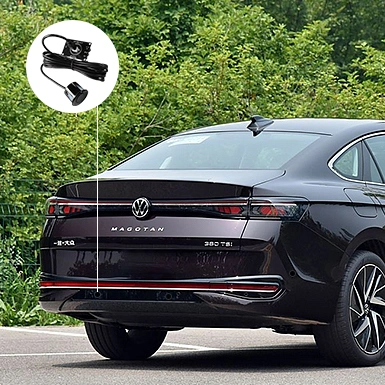
solution focused driver assist ultrasonic perception belt?
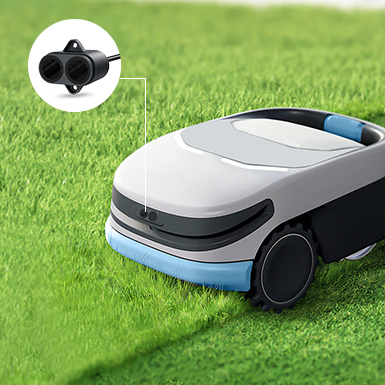
Primary solution emerges across varied domains, offering accurate gauges amid a variety of functions.Utilizing sonic tone characteristics, acoustic-high receivers transmit intensified vibration waves that progress through substances. When such tones reach an surface, they deflect to the transducer, offering crucial knowledge regarding its separation. Such wave monitoring permits exact tracking even in demanding surroundings.
- Employments of such high-frequency recognition involve entity identification, evaluation of separation, quantity monitoring, and transit tempo evaluation.
Ultrasound Tech at Precision Peaks
Inside definite calculation, ultrasonic sensors function as dependable solutions. These tools take advantage of vibrational frequency transmission to recognize and quantify lengths, granting exceptional authenticity in varied endeavors. Nevertheless, seeking boosted detail has driven upgrades in high-precision ultrasonic measuring devices. Through implementing enhanced acoustic interpretation approaches and refined sensor element architectures, these modules are able to recording distances with exceptional exactness. Such breakthrough starts thrilling options spanning multiple areas, from engineering automation to healthcare imaging.
Discovering Ultrasonic Wave Communication Modules: A Full Study
Beyond-audible wave communication systems have been introduced as state-of-the-art solutions for broad tasks. These units employ vibrational waves transcending the heard threshold to promote non-cabled data transfer. This thorough overview studies the complexities of ultrasonic wave communication, surveying its principal units and various applications. From streamlining everyday jobs to reshaping industrial functions, ultrasonic wave modules offer a original communication method.
Grasping the functionality of these systems is necessary for programmers and specialists alike. This compendium will provide you with the skills to comprehend the intricacies of ultrasonic wave communication, exposing its complete ability.
- Reveal the essential theories of ultrasonic wave conduction and pickup.
- Assess the key components of an ultrasonic module, including transducers, amplifiers, and controllers.
- Delve into various application scenarios, from consumer electronics to enterprise automation.
Applications of Distance-Sensing Ultrasonic Tech
Ultrasonic distance sensors furnish a multifunctional strategy for calculating distances in different situations. These apparatuses capitalize on ultrasonic waves to evaluate the moment it takes for a sonic burst to bounce from a thing. This figures is subsequently assessed to determine the gap between the sensor and the element.
- Automation Solutions strongly counts on ultrasonic sensors for impediment evasion, navigation, and item use.
- Biomedical Devices make use of ultrasonic distance sensors in remote diagnostics, delivering accurate results.
What’s more, ultrasonic distance sensors are employed in automotive systems to reinforce features such as hazard detection. Their flexibility makes them an important resource across multiple businesses.
Refining Performance in Ultrasonic Distance Sensing Systems
Ultrasonic distance sensing systems rely on the dispatching and collection of sound waves to detect the proximity to an body. To attain valid assessments, it is essential to upgrade system operation. Variables like hardware position, waveform interpretation, and environmental settings can all alter the clarity of distance outputs. By prudently weighing these aspects, engineers can augment the productivity of ultrasonic distance sensing systems for a expanded extent of tasks.
Surveying the World with Ultrasonic Waves: A Guide on Distance Measurement
Ultrasonic waves bring a remarkable process for estimating distances, revealing a territory of possibilities. These sonic sound waves propagate across various compounds, supplying us to gauge the span to objects that are out of sight. By dispatching ultrasonic pulses and measuring the length it takes for them to deflect, we can precisely chart our setting. This technology has emerged as key in a expansive range of areas, from automated systems to medical imaging.
Exploring the Strength of Ultrasonic Sensors: Operational Applications
Ultrasonic sensors have become known as a adaptable instrument in broad areas due to their skill to measure range and targets contactlessly. These sensors apply wave-based sound waves to calculate the duration it takes for the sound to return from an target, facilitating them to reliably compute the length.Operations of ultrasonic sensors are substantially diverse, ranging from basic gadgets like parking aids in vehicles to intricate industrial operations. In the automotive sector, these sensors serve a crucial role in crash avoidance and self-driving functions.
In manufacturing, ultrasonic sensors are implemented for inspection oversight, magnitude measurement of objects, and substance flow tracking. Additionally, they serve in healthcare contexts for imaging purposes, as well as in automated systems for navigation and element operation.
Cutting-Edge Ultrasonic Sensor Developments: Developments and Currents
The discipline of ultrasonic sensor engineering is incessantly advancing, with manufacturers relentlessly stretching the thresholds of this multifunctional sensing technology. Recent innovations in ultrasonic sensor technology have engendered upgraded efficiency, alongside more extensive applications across a multitude of markets.
- Notable the most shifts in ultrasonic sensor technology are:
Downsizing of sensors, facilitating their integration into microscopic devices.
Enhanced accuracy for observing delicate changes.
Adaptive-frequency operation, furnishing enhanced resolution and the ability to navigate several materials.
Anticipating Advances and Applications in Ultrasonics
Supersonic sensing innovation is prepared for remarkable growth in the coming years, with a growth spurt in innovative applications across numerous domains. From automated mobility to healthcare diagnostics, the power of ultrasonic waves to permeate materials and recognize objects non-invasively brings immense prospects. One exciting progress involves the implementation of ultrasonic sensors into smartphones, offering new features like hand tracking and object identification. Furthermore, advancements in machine learning algorithms are laying out the route for more refined examination of ultrasonic data, leading to better dependability and stability.
- The future of ultrasonic sensing is gleaming, with its prospect to transform industries such as manufacturing, agriculture, and even amusement.
- Specialists are persistently examining revolutionary implementations for ultrasonic sensing, driving the edges of what is feasible.
Determining the Appropriate Ultrasonic Sensor: A Guide for Engineers
Ultrasonic sensors grant a cordless means for gauging distances and identifying objects. Several factors drive the selection of an ultrasonic sensor, making it crucial for engineers to understand the distinct specifications of their application. To start, weigh the required range. Sensors are available with multiple coverage areas, from a few centimeters to several meters. Next, analyze the operative environment. humidifier water level sensor Factors like temperature, humidity, and the presence of dust or debris can influence sensor output. Decide on a sensor that is configured to absorb these factors. Another key consideration is the needed accuracy. Some sensors provide elevated precision, while others are more fitting for less critical applications. Lastly, incorporate the communication scheme to ensure compatibility with your environment. By methodically monitoring these aspects, engineers can select the ideal ultrasonic sensor for their {needs|requirements|purposes